The Proximity Effect
Depending on your proximity to a microphone, the frequency response can change significantly. Directional microphones, in particular, tend to emphasize lower frequencies as you get closer to them. This effect, known as the Proximity Effect, is why radio broadcasters and podcasters often have rich, deep voices. By positioning the microphone very close, they naturally enhance the lower frequencies, adding warmth and depth to their sound.

Emphasizing Lower Frequencies
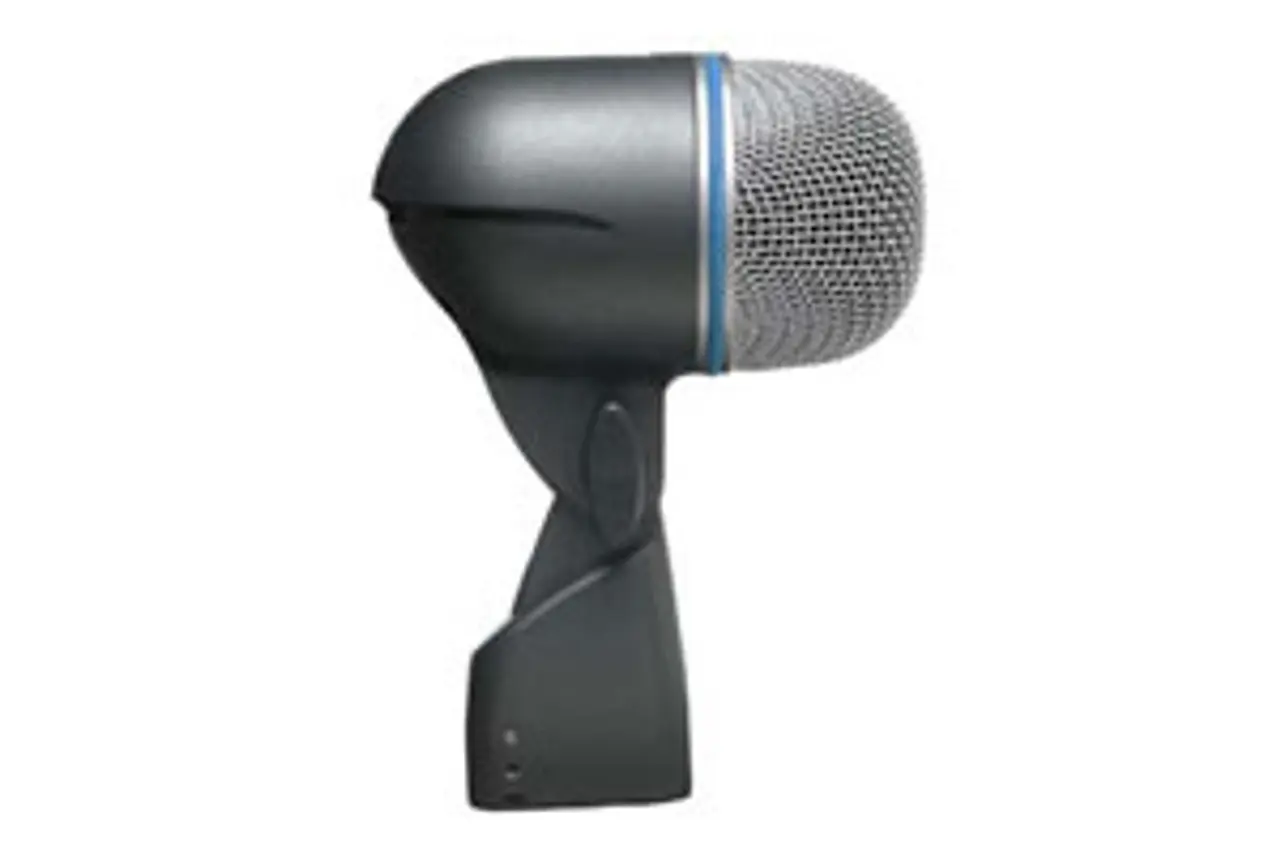
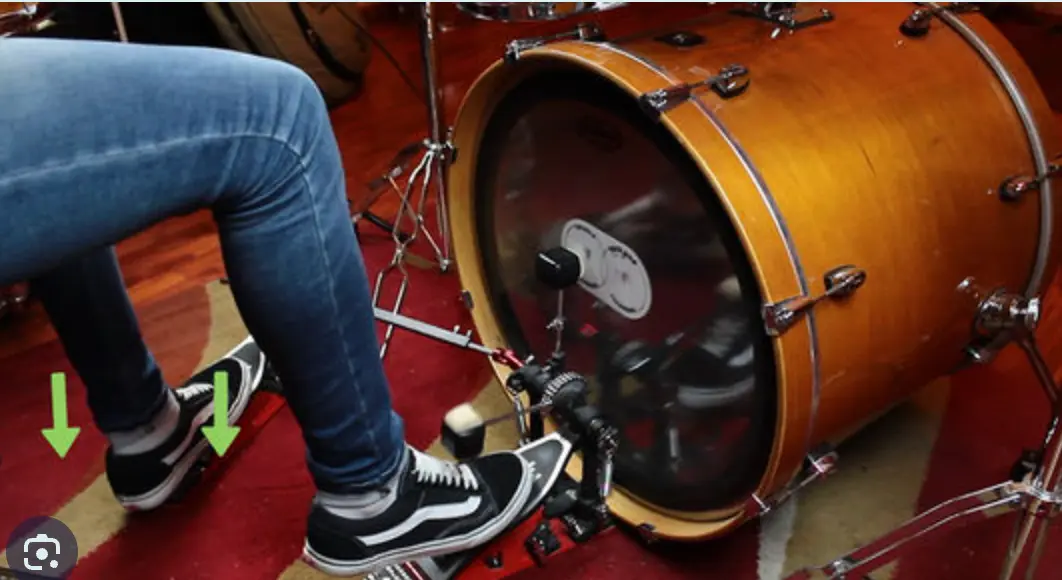
Some microphones exhibit a greater proximity effect than others. A classic choice for kick drums is the Shure Beta 52. When choosing such a microphone, we need one with an excellent low-frequency response, as low frequencies are the most characteristic of those big drums that people kick.

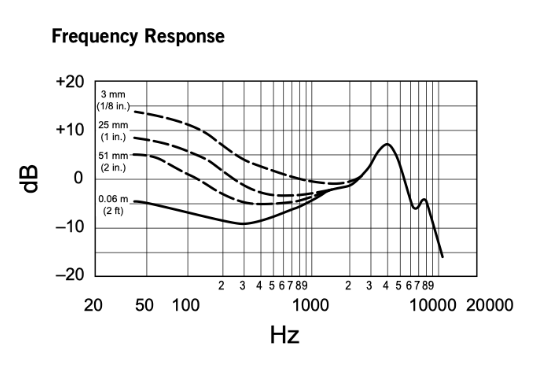
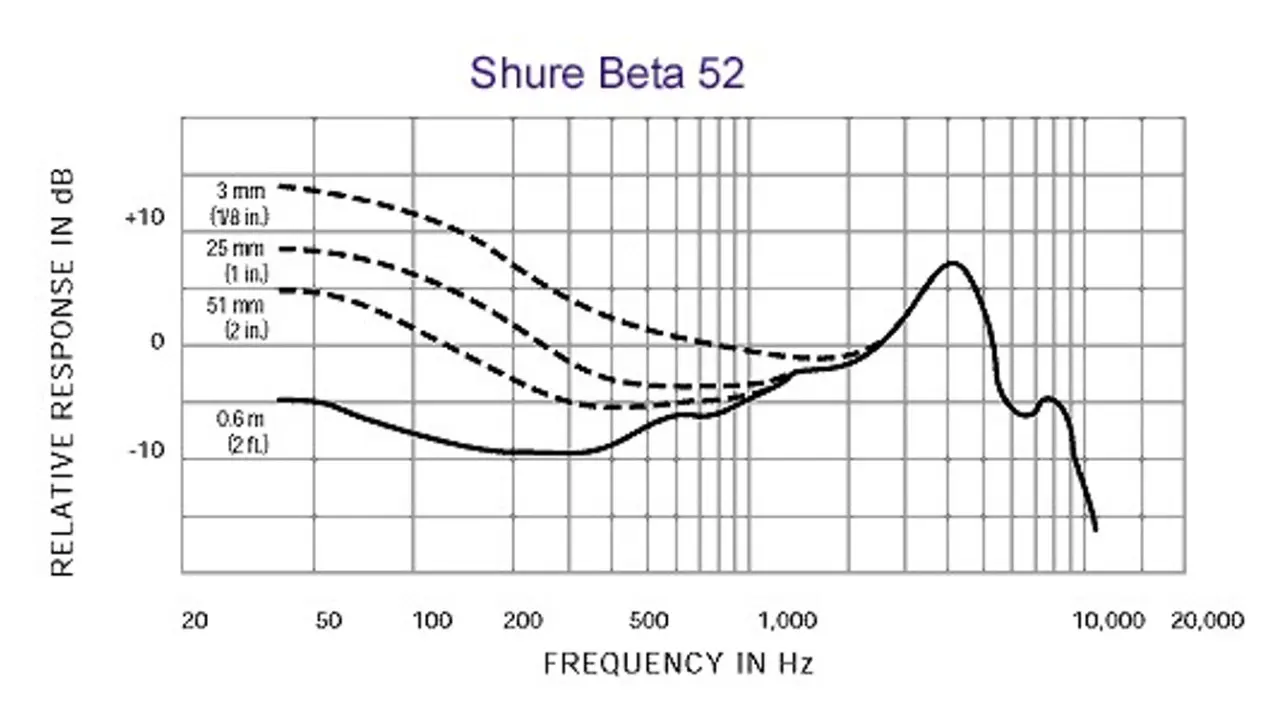
Look at the manufacturer's frequency response diagram for this microphone and observe the dashed line markings. Each of the dashed lines coincides with a different distance to the microphone. Notice how the top dashed line corresponds to the closest distance, and therefore, the lowest frequencies are the most emphasized.