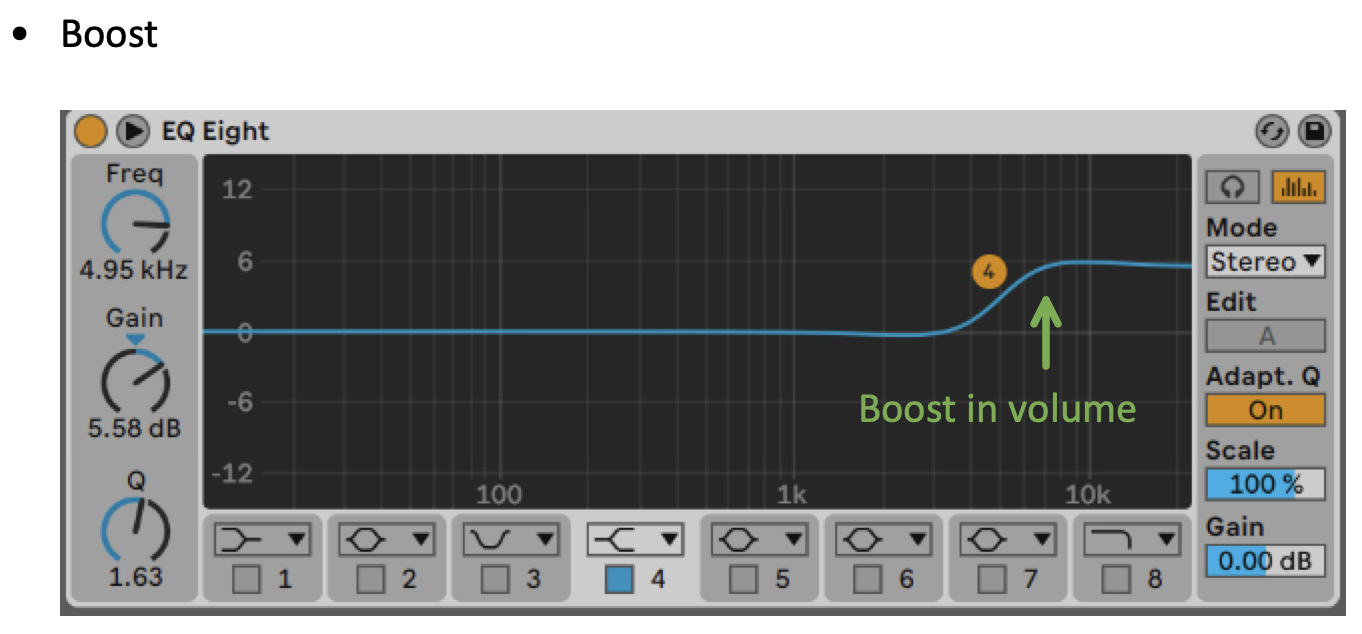
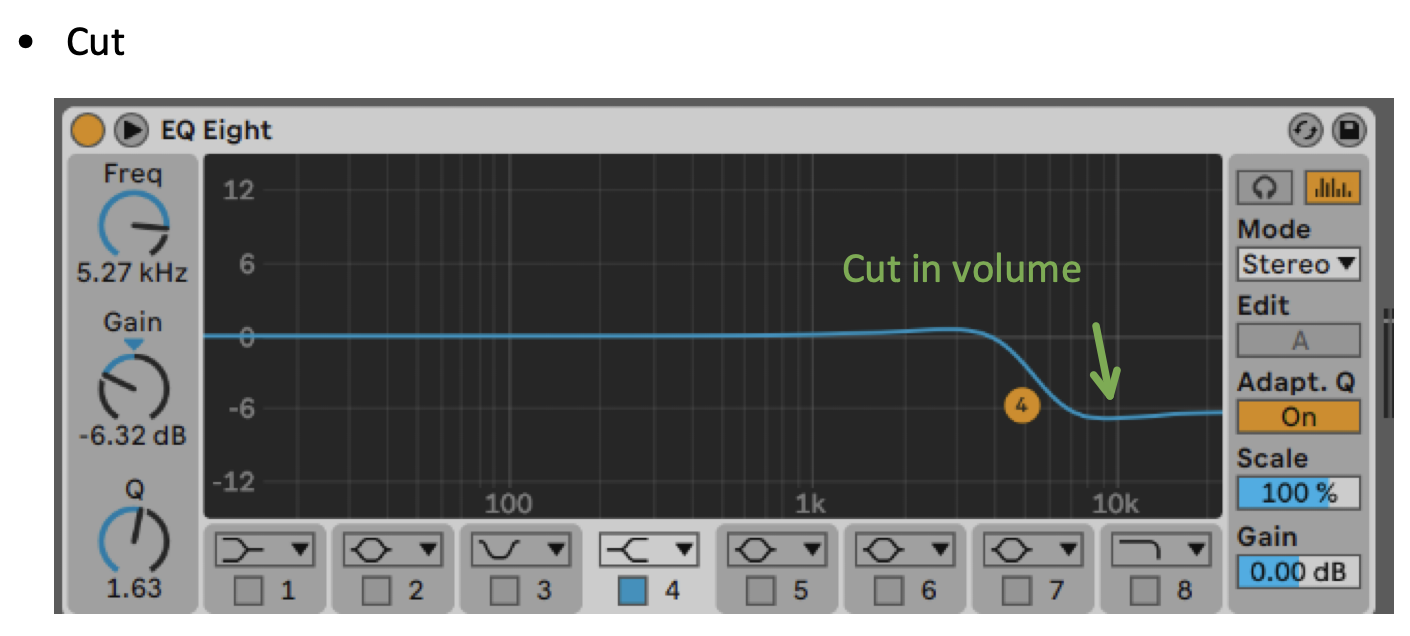
Filters within an EQ
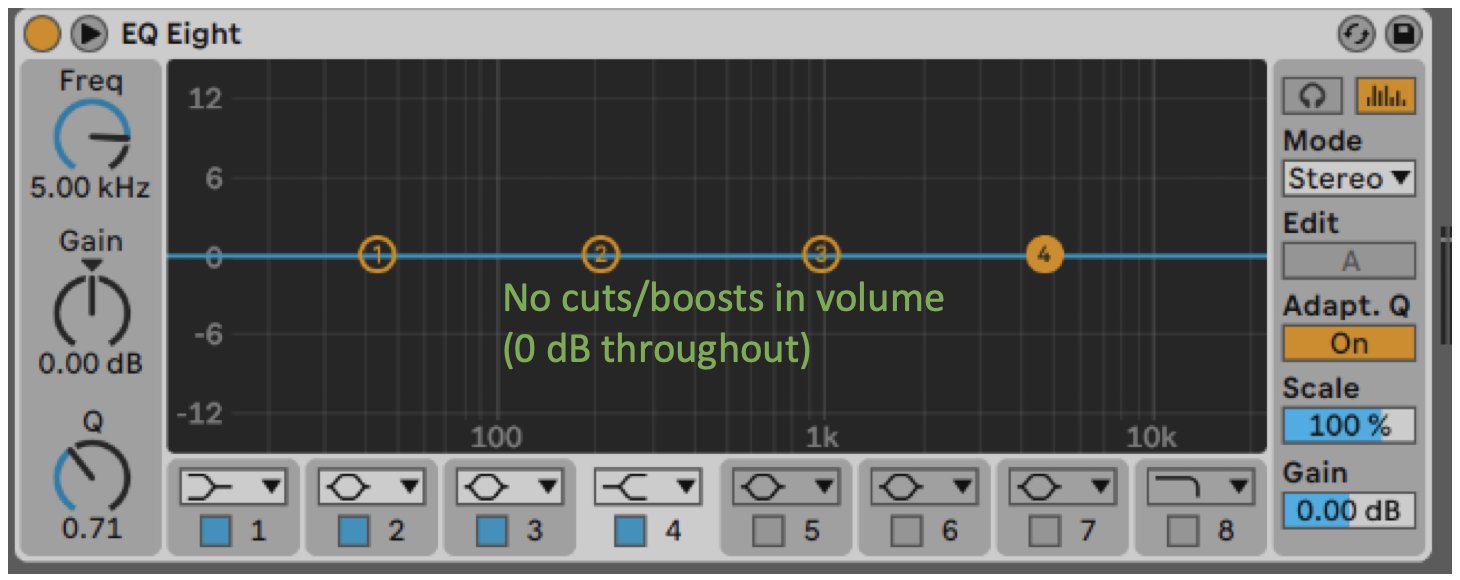
Flat Frequency Response
The alteration in shape caused by a filter is termed its frequency response. A flat frequency response signifies no alteration in the signal's frequency content. In its default setting, an equalizer applies no gain to any frequency bands, resulting in a flat frequency response.
Lowpass/High Cut Filter
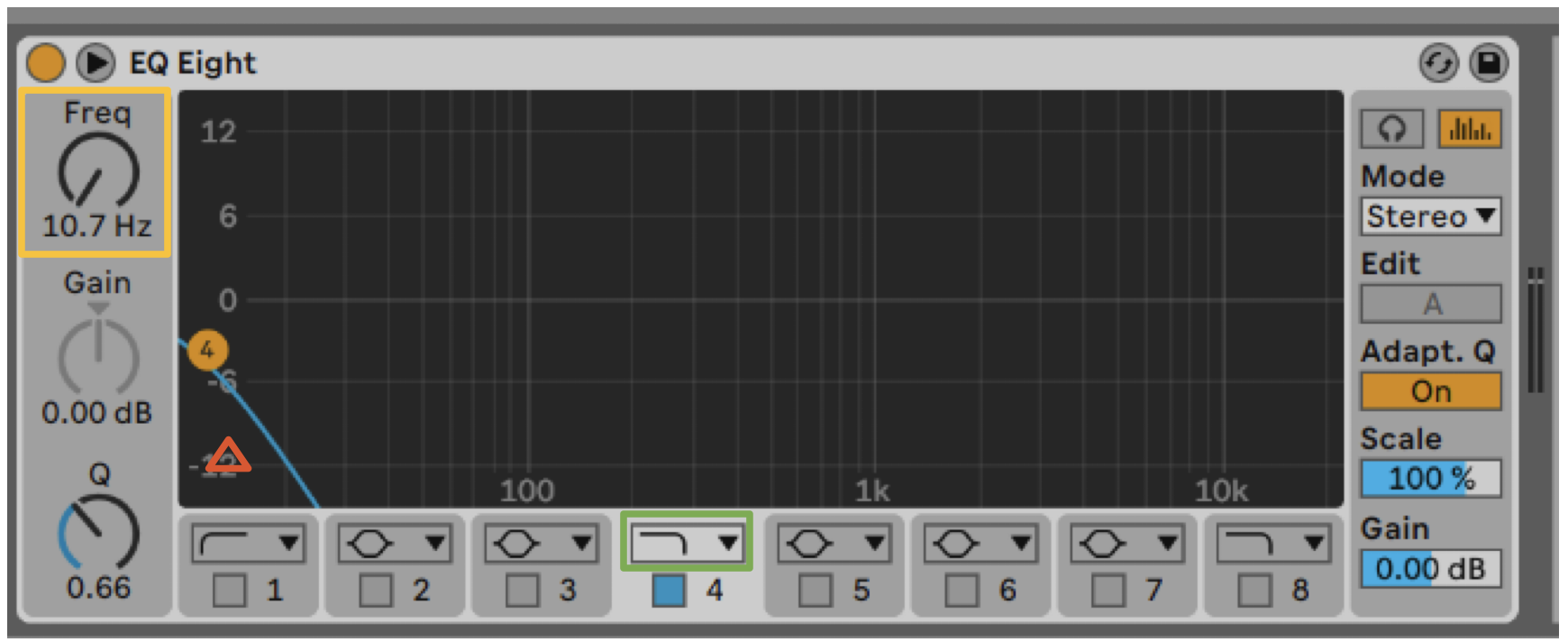
A lowpass filter, alternatively referred to as a high cut filter, allows lower frequencies to pass through unchanged in all scenarios. However, it often reduces the volume of higher frequencies in many situations.
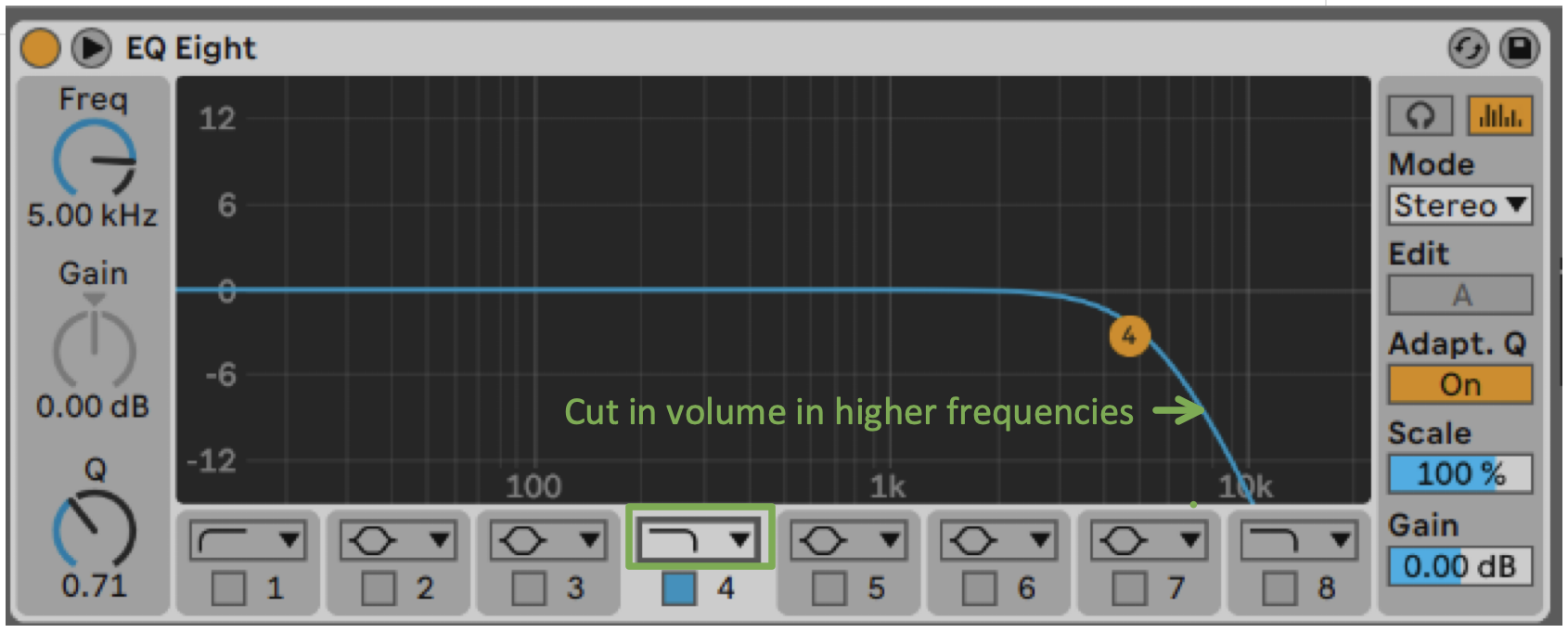
Even when setting the filter's cut-off frequency (highlighted in yellow) to its minimum level, the lowest frequencies continue to pass through the filter without alteration, while nearly all of the high frequencies are attenuated. The frequency range highlighted by the red triangle indicates these high frequencies unaffected by the filter.
High Pass/Low Cut Filter
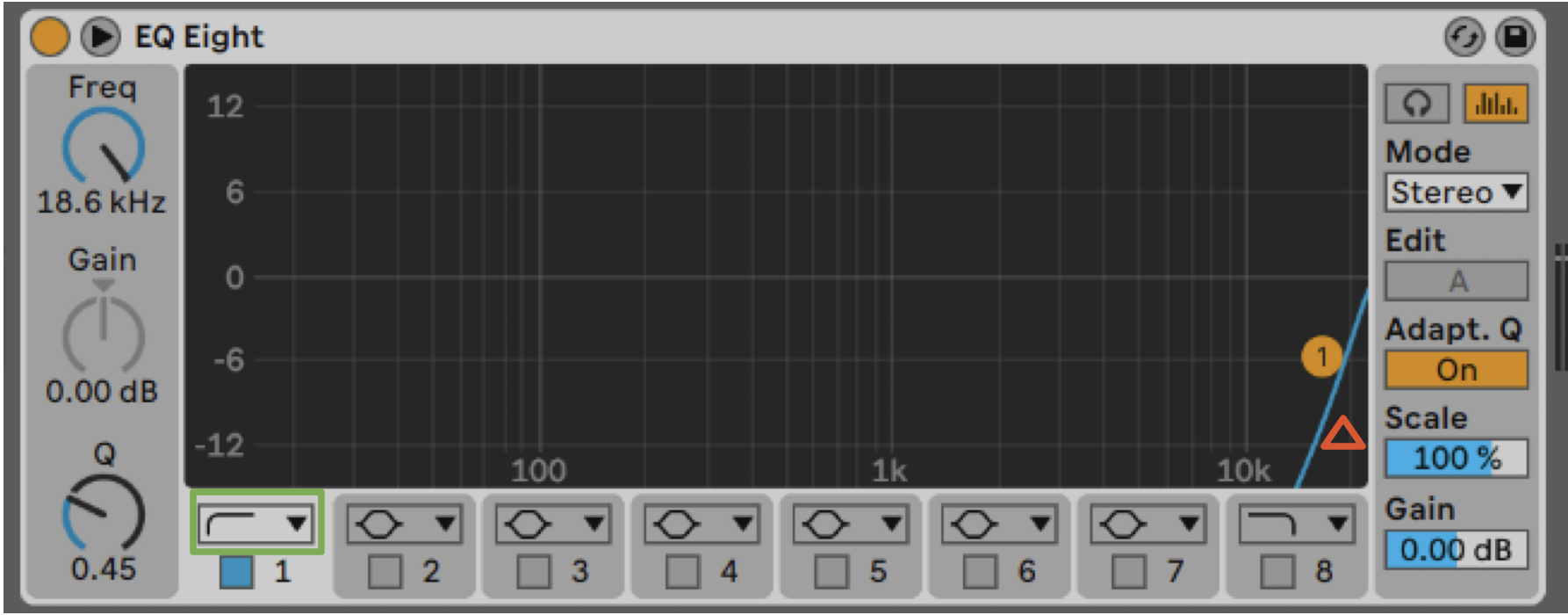
A high pass filter, sometimes referred to as a low cut filter, allows the highest frequencies to pass through the filter without alteration under all conditions. However, it often reduces the volume of low frequencies in many situations.
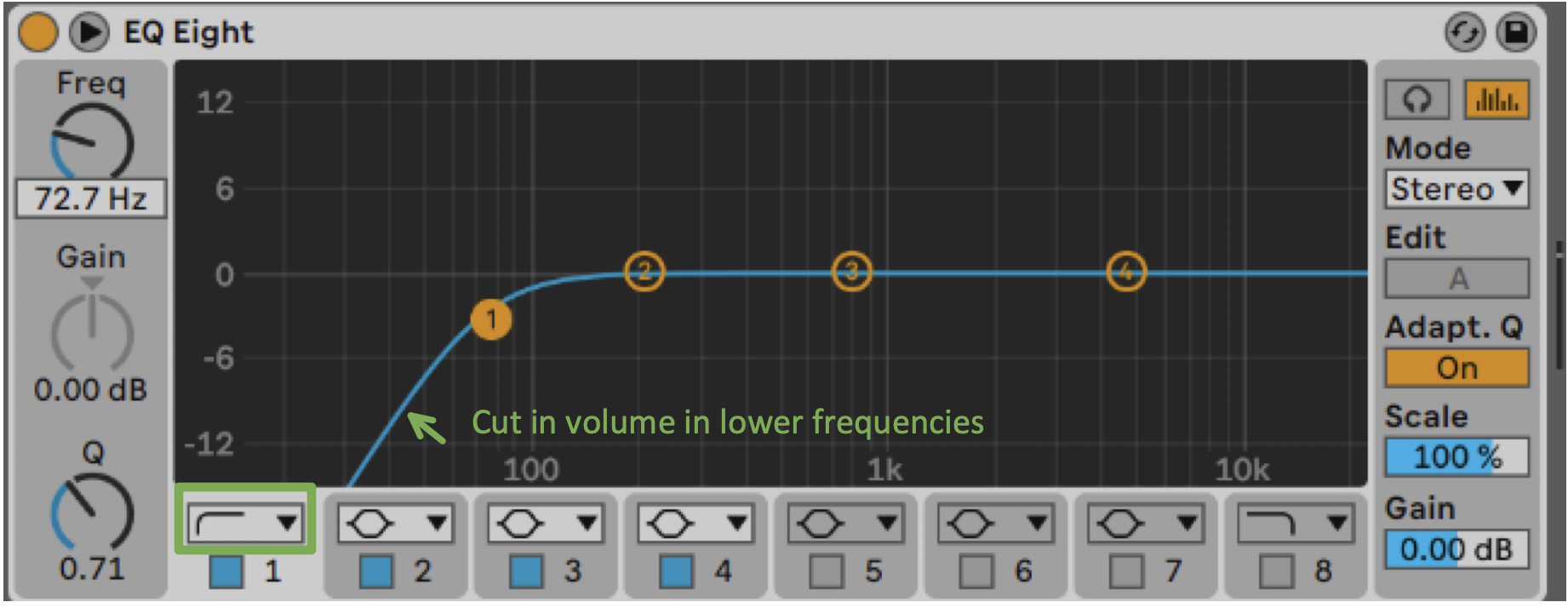
Even when setting the filter's cut-off frequency (highlighted in yellow) to its maximum level, the highest frequencies continue to pass through the filter without alteration, while nearly all of the low frequencies are attenuated. The frequency range highlighted by the red triangle indicates these high frequencies unaffected by the filter.
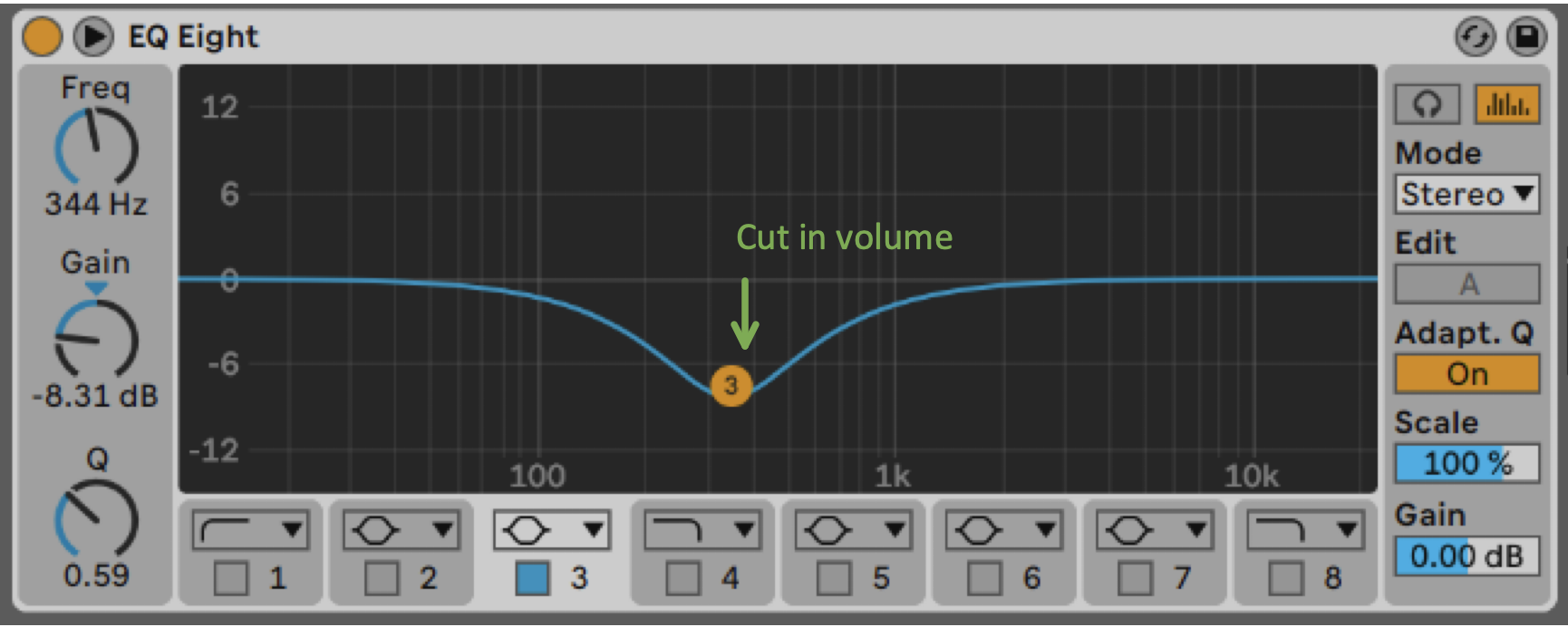
Bell Filter
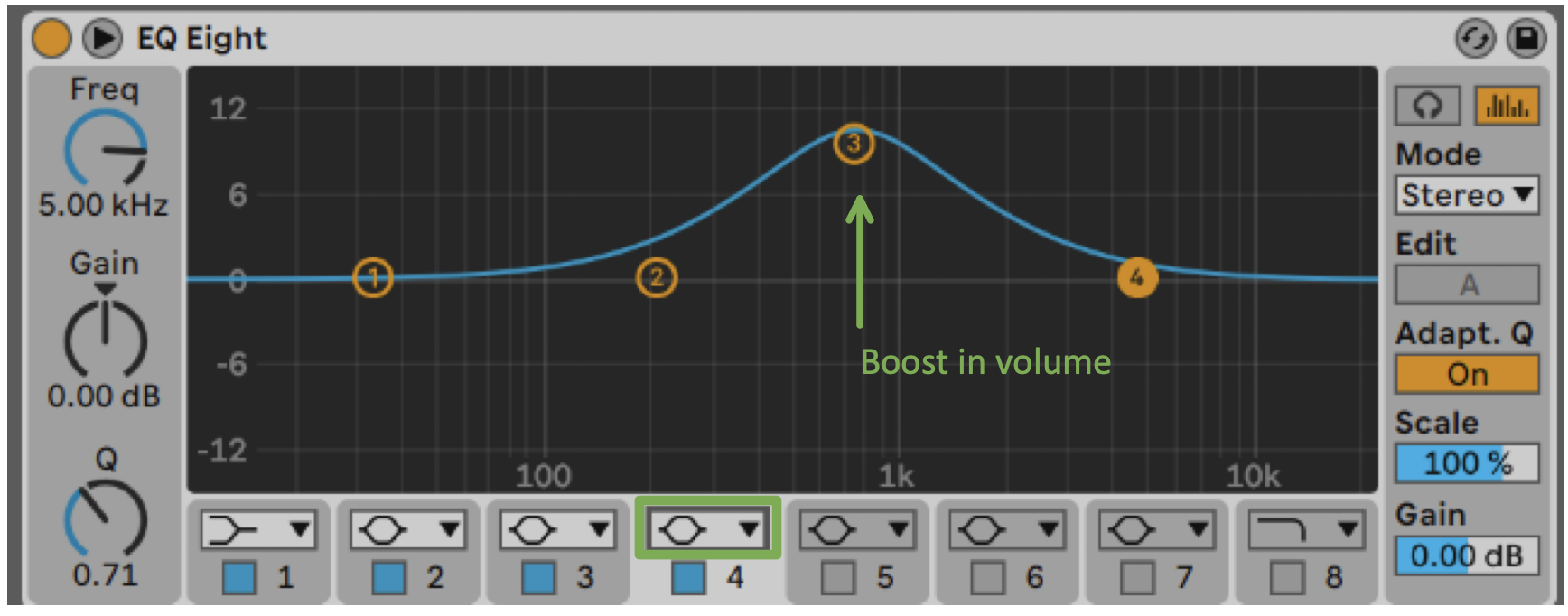
A bell filter enables adjustment, either amplifying or reducing a specific range of frequencies.
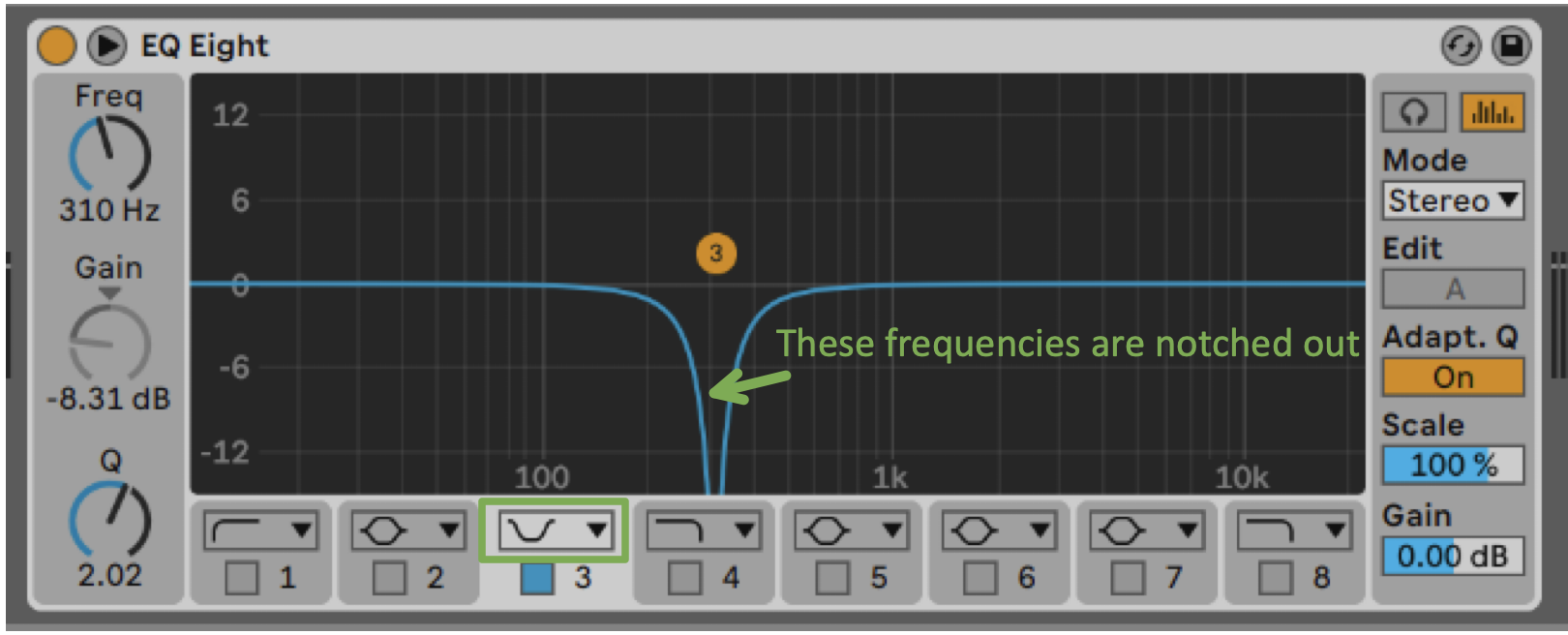
Notch Filter
A notch filter completely removes a frequency region from the sound.
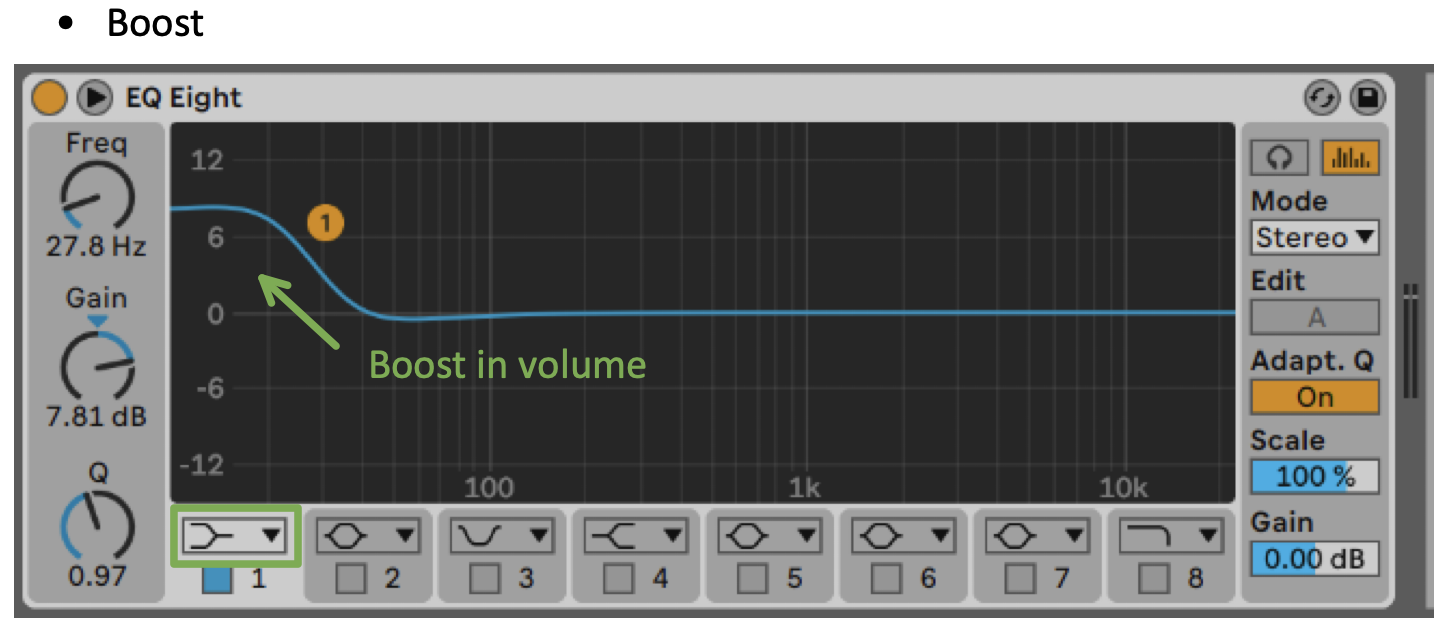
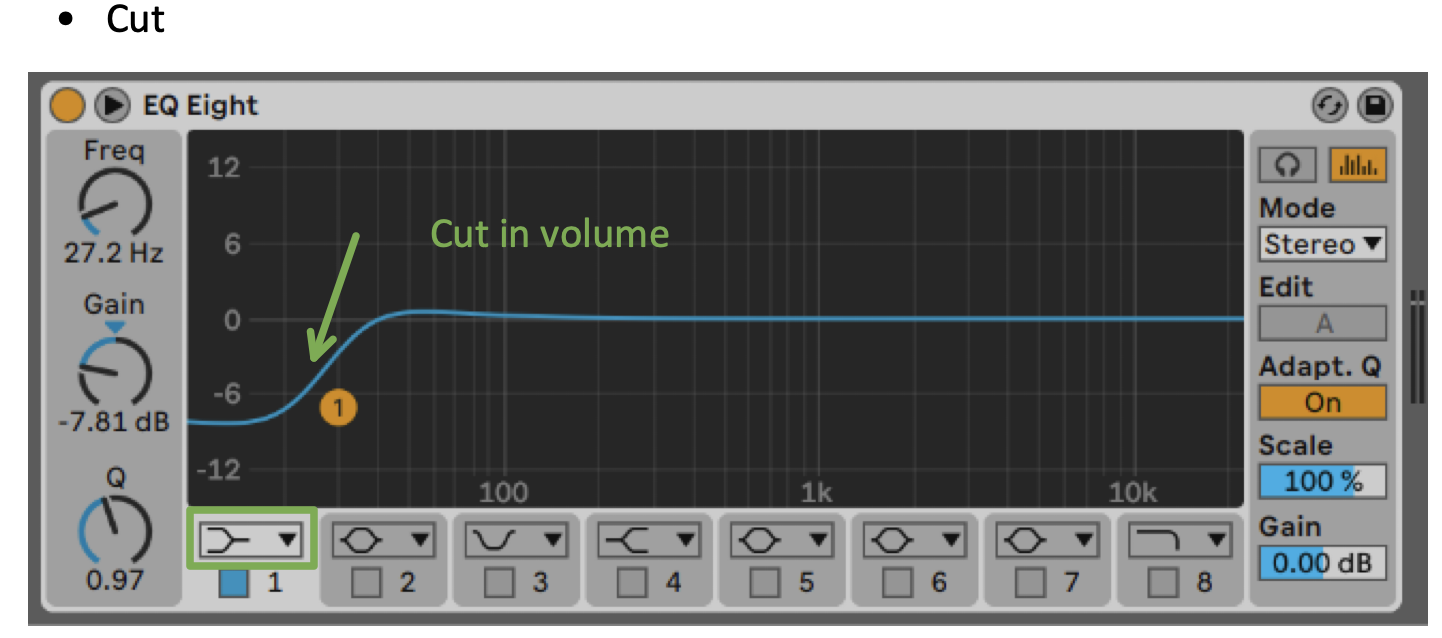
Low Shelf
A low shelf filter boosts or cuts the low frequencies using a shelf-like shape.
High Shelf
A high shelf filter boosts or cuts the high frequencies using a shelf-like shape.