Sources of Noise
The objective is to lower the noise floor during recording. To achieve this, we aim to record in a quiet environment, minimizing ambient noise. Additionally, it is crucial to properly configure our recording system to prevent any noise from being introduced into the setup.
Ambient Noise
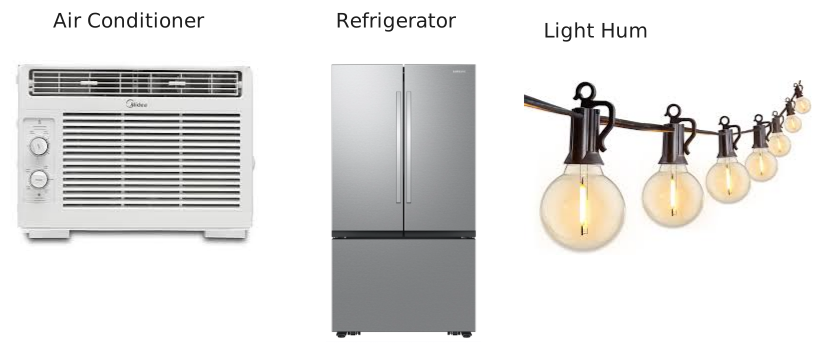
Ambient noise could refer to the background sounds present in an environment, such as the humming of an air conditioner.
Pre-Amp Noise
Pre-amplifiers tend to add noise, particularly when you turn the gain potentiometers up to the top 10 percent of their range. It is usually wise to avoid cranking the pre-amp gain that high. Instead, you can use a cloud lifter to add clean gain to the circuit, which helps prevent the introduction of undesirable pre-amp noise.
Microphone Self Noise
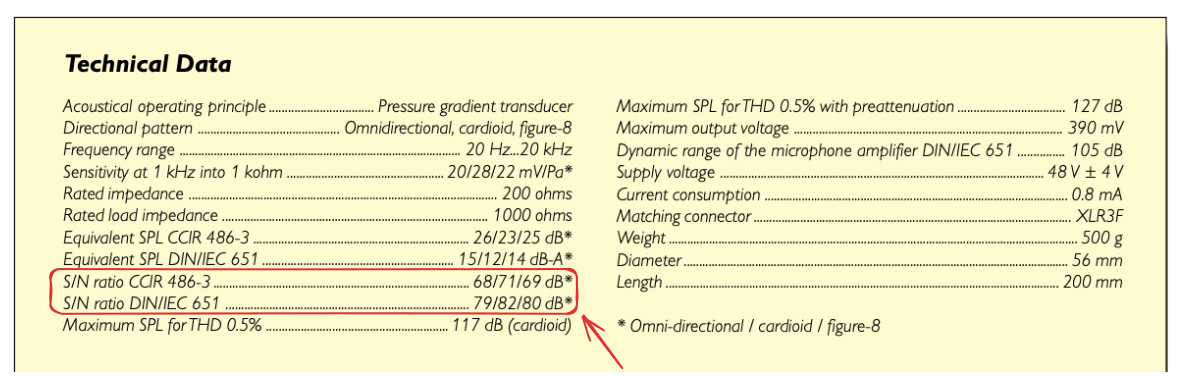
All microphones generate some level of noise. This inherent noise is referred to as self-noise, and details about it can typically be found on the microphone's specification sheet. Here are the self-noise specifications for the Neumann U87.
Digital System Noise
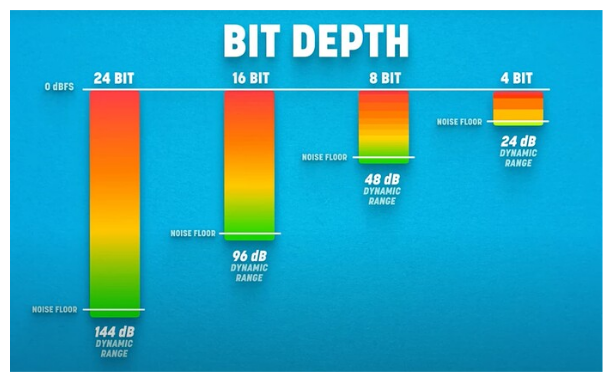
Bit depth determines the digital noise floor. A 16-bit system has a noise floor of 96 dB, while a 24-bit system achieves a noise floor of 144 dB.
Analog Noise
To be expanded on...